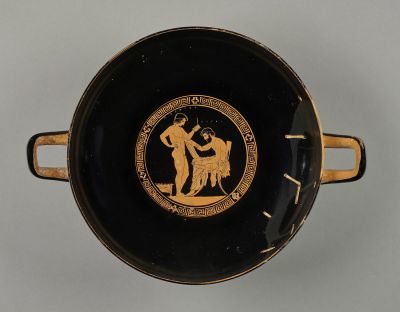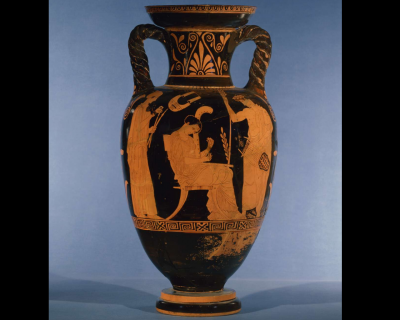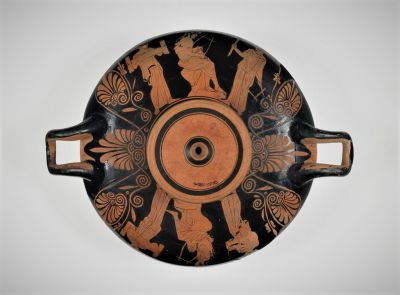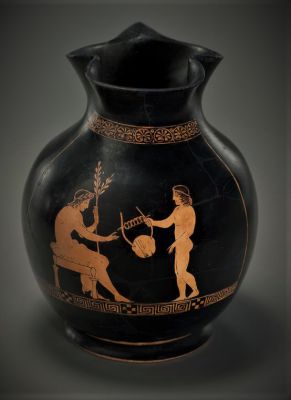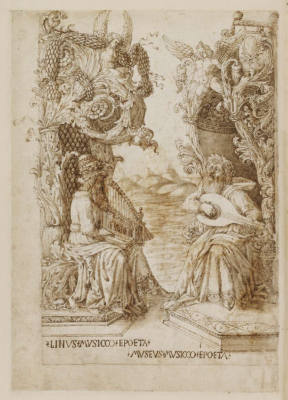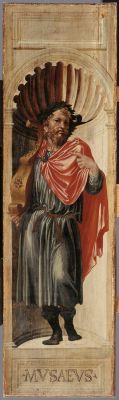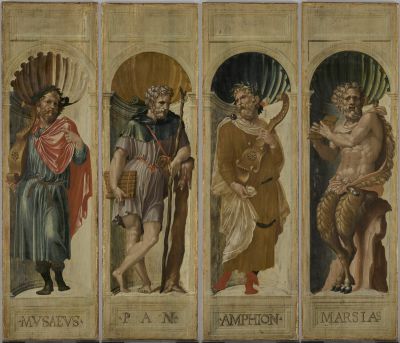
Poet, composer of songs and choruses, musician and (according to Herodotus) soothsayer. While he is most commonly considered to have come from Thrace or Eleusis, Eurypides and Pausanias say that he was born and lived his entire very long life in Athens. His father was Antiphemus or Eumolpus and his mother Selene or Mene, but there is also mention of a Helen who may have been his mother or daughter. Thamyris and Orpheus are also named as his father, while other sources say that Orpheus was his teacher; like Linus and Thamyris, those other great musicians of Antiquity, Musaeus was considered their son or pupil. He is generally considered to have been brought up by the Nymphs. His wife is said to have been Deioppe, who gave him a son, Eumolpus. According to Pausanias, Musaeus sang on the hill opposite the Acropolis and was buried there. He is said to have been a very great musician, capable of healing the sick with his songs – indeed, his very name, “Musaeus”, implies the archetype of a musician. He was also considered a seer and the person who introduced the Eleusinian Mysteries into Attica and initiated Heracles into them. Diodorus Siculus says that he was the chief celebrant at the Mysteries which Heracles attended shortly before undertaking his eleventh labour. He is credited with describing the Trojan War and with various poems of a mystical nature. Pausanias, however, says that the Eumolpia is wrongly ascribed to Musaeus and that the only work he wrote was a hymn to Demeter for the Lycomidae.